OSHA vs. CSA Forklift Training for Canada Expansion
Expanding warehouse operations across the Canadian border presents exciting opportunities for US businesses. Before the first forklift arrives, however, operator training and local compliance expectations need careful attention.
- OSHA requirements
- CSA B335 guidance
- Provincial compliance
- Operator evaluations
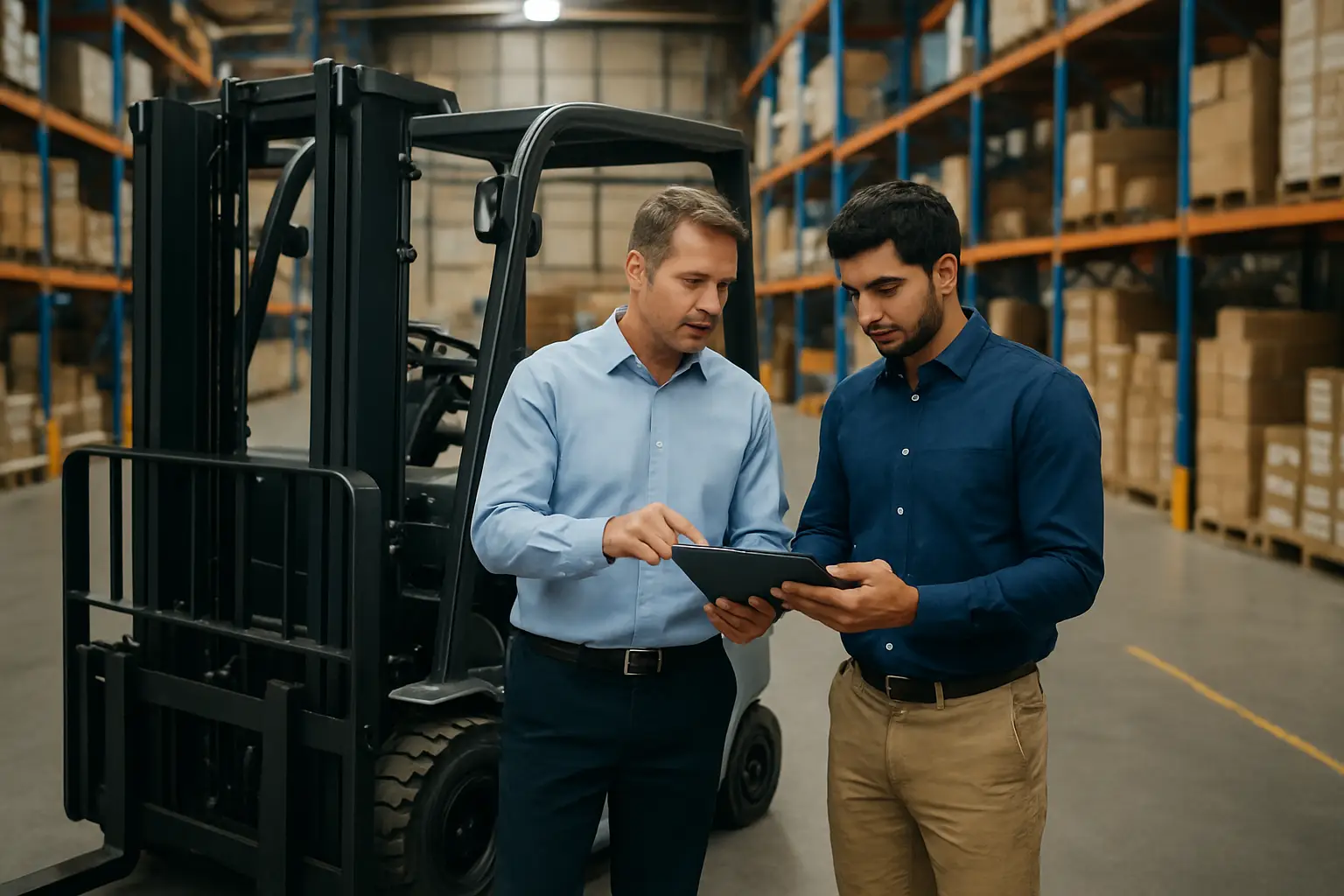
Why US forklift training procedures may need to change in Canada
Whether your company is opening a new distribution centre, supporting e-commerce growth, or serving Canadian customers more efficiently, forklift training should be reviewed before operations begin.
Many US fleet managers assume forklift certification requirements are the same on both sides of the border. While the core principles of safe forklift operation remain consistent, Canada follows a different regulatory framework from the United States.
Understanding OSHA forklift training requirements
In the United States, forklift operator training is governed by the Occupational Safety and Health Administration under 29 CFR 1910.178.
OSHA requires employers to ensure forklift operators are properly trained and evaluated before operating powered industrial trucks. The employer remains responsible for verifying that each operator can safely use the equipment in the specific workplace.
- Formal classroom or instructional training
- Practical, hands-on training
- Workplace-specific operator evaluation
- Refresher training when necessary
- Employer training documentation


How Canada takes a different approach
Canada does not have one national forklift licensing system. Instead, employers follow recognized safety guidance developed through the Canadian Standards Association, particularly CSA B335, the Safety Standard for Lift Trucks.
Employers must also comply with the occupational health and safety legislation that applies in their province or territory.
CSA B335 is widely recognized as a national best-practice standard, but workplace safety enforcement is administered at the provincial and territorial level. As a result, documentation, evaluation, and employer obligations can vary by location.
OSHA vs. CSA B335: What are the main differences?
Both systems are designed to support safe forklift operation, but their regulatory structures and enforcement models are not identical.
| Area | OSHA in the United States | CSA B335 and Canadian requirements |
|---|---|---|
| Regulatory structure | Federal occupational safety framework | National safety guidance combined with provincial or territorial legislation |
| Enforcement | Standardized federal OSHA requirements | Provincial and territorial workplace safety agencies oversee compliance |
| Employer role | Employers train, evaluate, document, and authorize operators | Employers remain responsible for training, competency, documentation, supervision, and local compliance |
| Regional variation | Core requirements apply nationwide | Specific expectations may vary by province or territory |
| Cross-border use | OSHA-based training supports US operations | US training records may need review or additional local evaluation before Canadian use |
Provincial forklift requirements matter
One of the most important differences is that Canadian workplace safety regulations are administered provincially and territorially.
British Columbia
Employers must review the training, supervision, inspection, and documentation expectations that apply to workplaces operating in British Columbia.
Alberta
Alberta operations should align company training procedures with provincial occupational health and safety responsibilities.
Ontario
Ontario employers need to consider local competency, supervision, equipment, and workplace-specific training obligations.
Quebec
Quebec facilities may require localized policies, documentation, communication, and safety procedures.
Manitoba
Manitoba employers should confirm that operator preparation and internal records align with provincial workplace requirements.
Other jurisdictions
Requirements should also be reviewed for every other province or territory in which the company plans to operate.
What US companies should prepare before expanding
Moving into Canada does not necessarily mean rebuilding your entire forklift training program. It does mean reviewing the program against Canadian standards and local workplace expectations.
Evaluate training materials
Determine whether your current OSHA-based program aligns with CSA recommendations and the expectations of the province where the facility will operate.
Update company policies
Canadian locations may require different training records, inspection documentation, operator evaluations, or internal authorization procedures.
Train local supervisors
Managers responsible for Canadian operations should understand provincial workplace safety duties, reporting procedures, and operator oversight.
Review equipment needs
Confirm that forklift classes, capacities, attachments, charging systems, and operating environments match the new facility.
Equipment selection matters too
Training is only one part of a successful Canadian expansion. Choosing forklifts that match the facility, loads, workflow, and operating environment is equally important.
Equipment decisions should be made early enough to support operator training, workplace evaluations, maintenance planning, and charging or refuelling infrastructure.
- Will the forklifts operate indoors, outdoors, or in both areas?
- Are electric forklifts appropriate for the warehouse?
- Are reach trucks required for narrow aisles?
- Will rough-terrain forklifts be used outside?
- What lifting capacities and mast heights are needed?
- What battery charging infrastructure is available?

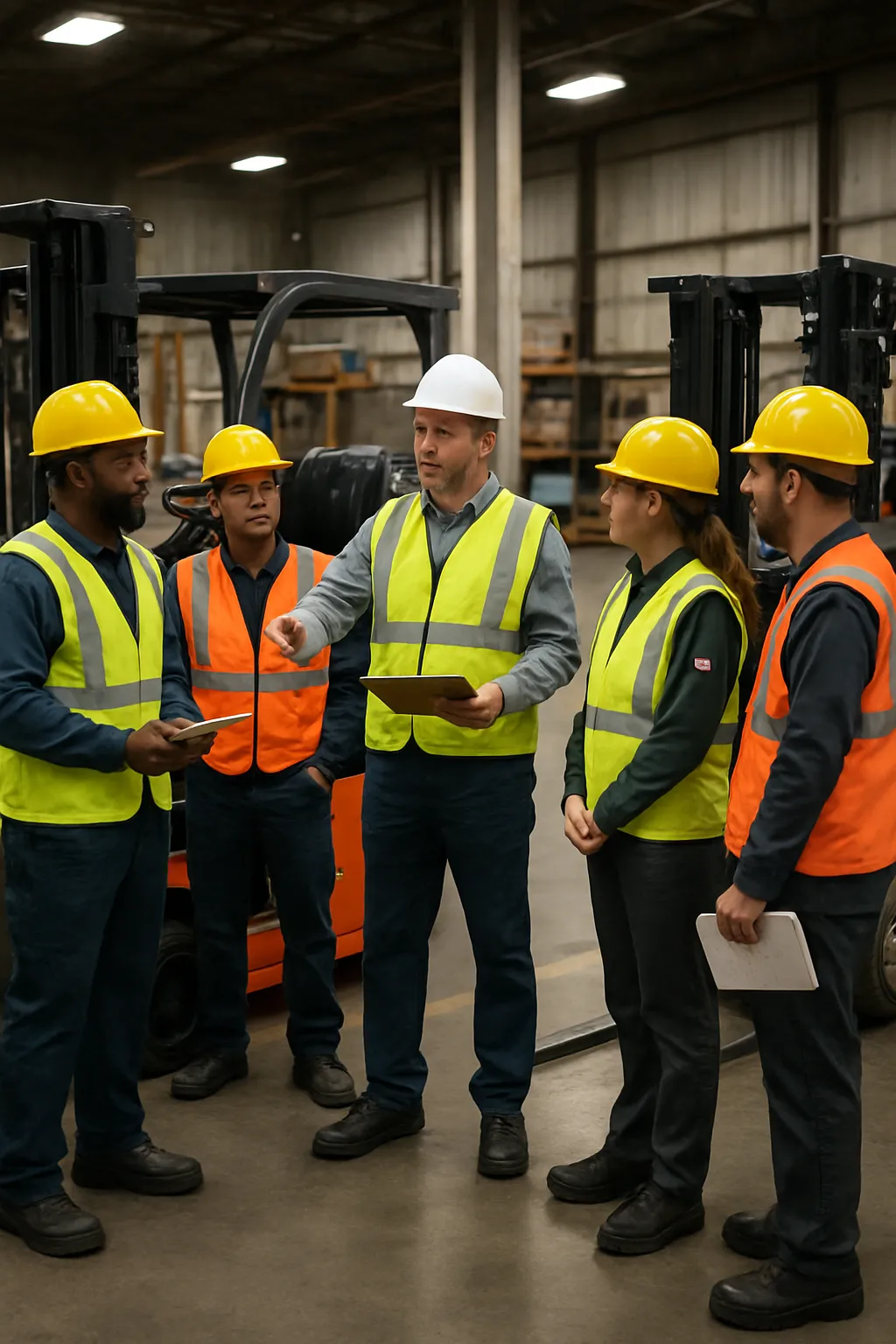
Build a consistent cross-border safety culture
Although OSHA and Canadian requirements differ, their shared objective is protecting workers through proper training, practical evaluation, supervision, and safe equipment operation.
Companies operating in both countries should create consistent internal standards that meet or exceed the requirements of each local jurisdiction.
- Initial operator instruction
- Practical equipment evaluations
- Workplace-specific orientation
- Regular refresher training
- Daily forklift inspections
- Supervisor oversight
- Ongoing safety education
Common mistakes US companies make in Canada
Cross-border expansion becomes more difficult when a company assumes its existing procedures can be transferred without reviewing Canadian requirements.
- Assuming OSHA certification automatically satisfies Canadian requirements
- Assuming every province follows identical training and documentation rules
- Using the same forklift specifications at every facility without reviewing the local environment
- Reusing existing training records without checking whether they document Canadian workplace expectations
- Waiting until equipment arrives before planning operator evaluations and supervisor responsibilities
Plan before your first Canadian forklift delivery
Expanding into Canada offers valuable opportunities for logistics providers, manufacturers, retailers, and warehouse operators. Success depends on more than finding the right facility. It also requires planning for local training expectations, operator competency, equipment selection, and provincial compliance.
For additional equipment guidance, industry insights, training information, and nationwide buying resources, explore Canada's complete forklift resource.

Common questions about OSHA and CSA forklift training
Does OSHA forklift certification automatically apply in Canada?
Not necessarily. OSHA-based training may provide a useful foundation, but Canadian employers must also consider CSA B335 guidance, workplace-specific competency, and the occupational health and safety requirements of the province or territory where the operator works.
Is CSA B335 a forklift licence?
CSA B335 is a recognized safety standard for lift trucks. Canada does not operate one national forklift licensing system, so employers must combine appropriate training and evaluation practices with applicable provincial or territorial requirements.
Can a US company use the same training program in every Canadian province?
A company can maintain a consistent internal training framework, but it should review and adapt that framework for the requirements, documentation practices, equipment, and workplace conditions of each Canadian jurisdiction.
Should operators be evaluated again after moving to a Canadian facility?
A workplace-specific evaluation helps the employer confirm that the operator can safely use the assigned forklift under the conditions, traffic patterns, loads, attachments, and hazards of the Canadian facility.