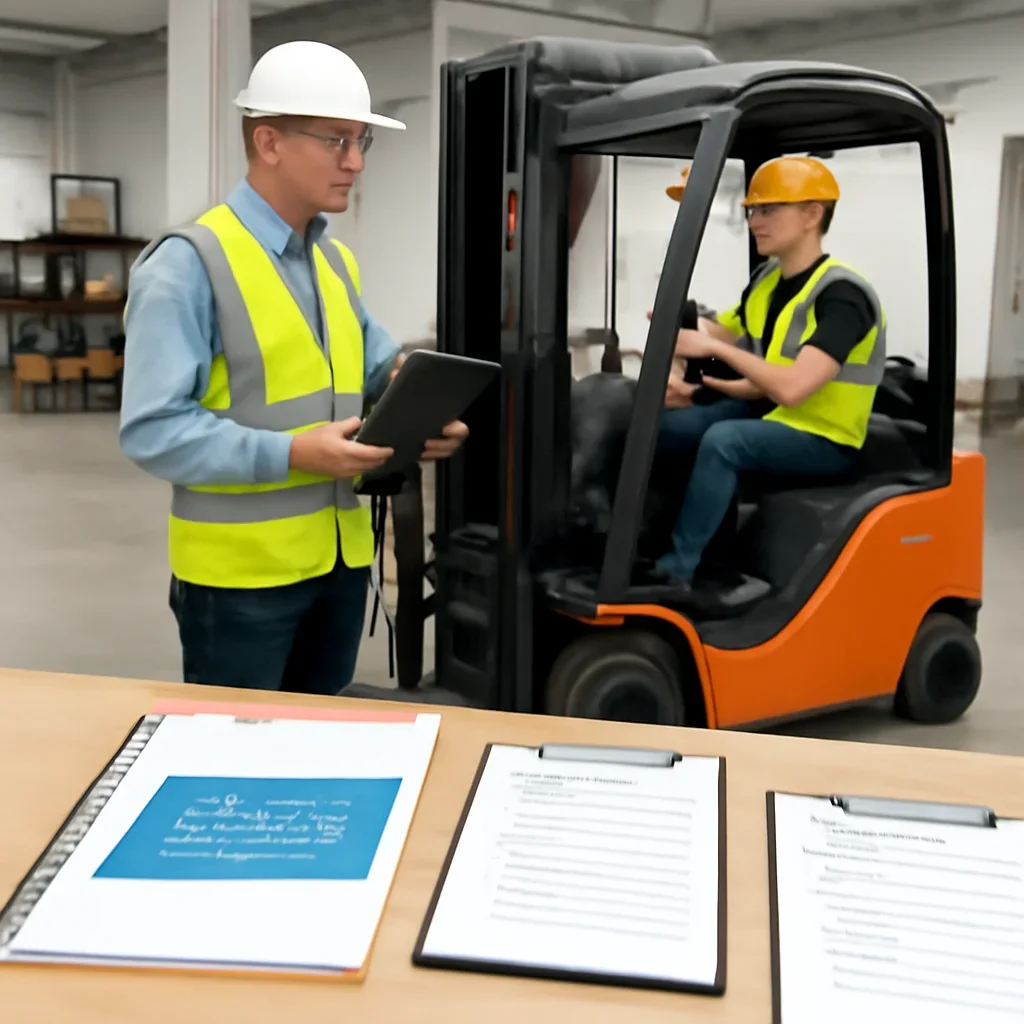
A strong operator evaluation looks at how the worker handles the assigned truck in the actual environment, not just whether a classroom portion was completed.

The evaluation should reflect the truck type, travel routes, load handling expectations, visibility challenges, parking habits, and local hazards that show up at your site.
A structured form keeps evaluators aligned on what they are watching. That makes the result easier to defend and easier to compare over time.
The operator, evaluator, date, and findings should be stored with the rest of the training history so the evaluation does not get separated from the certification trail.
The evaluation should reflect the truck type, travel routes, load handling expectations, visibility challenges, parking habits, and local hazards that show up at your site.
The goal is not simply to finish training. It is to give the employer a process that stays usable when supervisors change, audits happen, or operators move between roles and locations.
Most forklift training problems become easier to control when the team standardizes assignments, practical evaluations, and record storage instead of managing each piece in a different place.
If this topic is already causing friction in your operation, the fastest next step is usually to connect it to a more reliable workflow through Related pages: evaluation form, practical evaluation checklist, and operator evaluations.

Share your team structure, recordkeeping process, and the issue you are trying to solve. We will point you toward the right product, service, or support page.