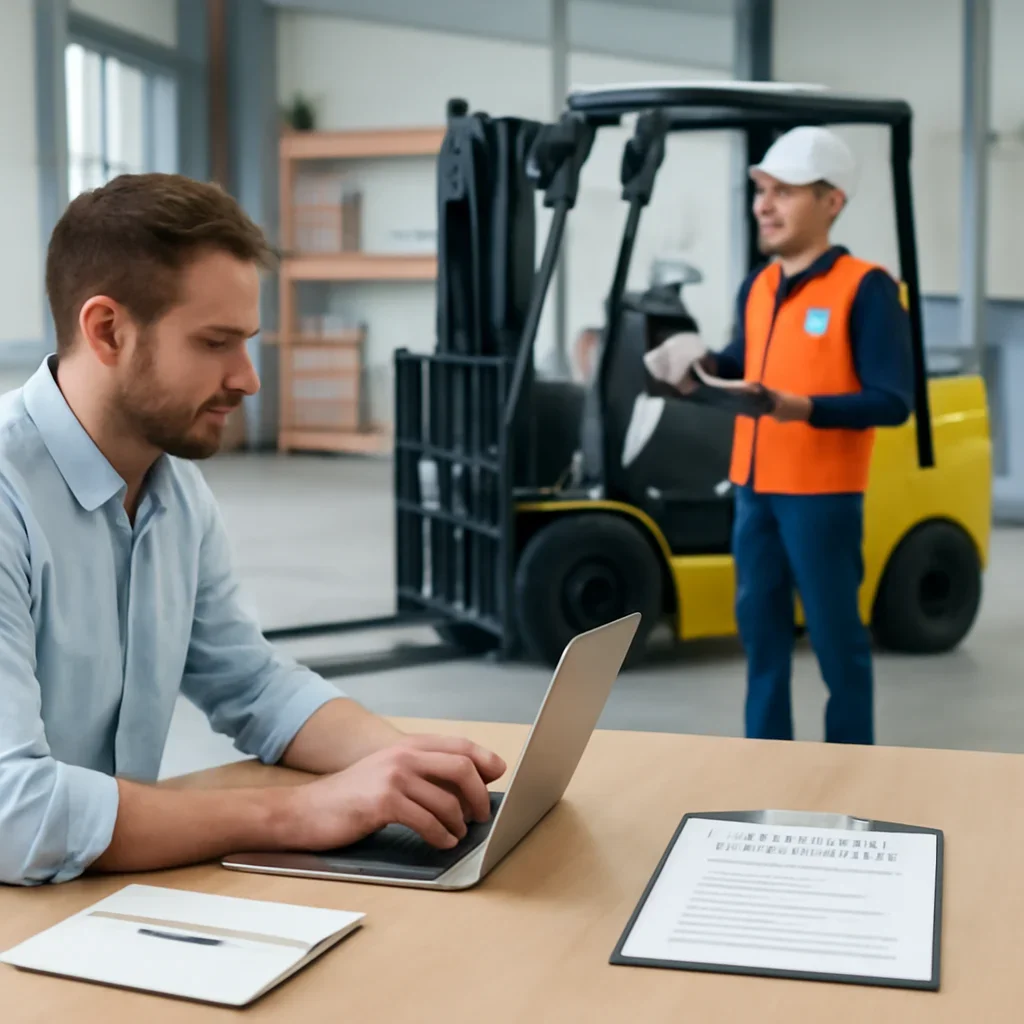
Online and on-site forklift training solve different parts of the employer workflow. Online delivery helps with assignment and theory at scale, while on-site delivery brings training closer to the real operating environment.

Online delivery is often the fastest way to assign formal instruction across shifts, branches, and seasonal hiring surges. It also makes completion tracking easier.
On-site delivery becomes especially useful when site conditions, unusual loads, outdoor work, or dense traffic patterns matter enough that supervisors want direct practical observation in context.
A blended approach often gives employers the best balance: formal instruction delivered efficiently, followed by a practical site-specific evaluation and documented signoff.
Online delivery is often the fastest way to assign formal instruction across shifts, branches, and seasonal hiring surges. It also makes completion tracking easier.
The goal is not simply to finish training. It is to give the employer a process that stays usable when supervisors change, audits happen, or operators move between roles and locations.
Most forklift training problems become easier to control when the team standardizes assignments, practical evaluations, and record storage instead of managing each piece in a different place.
If this topic is already causing friction in your operation, the fastest next step is usually to connect it to a more reliable workflow through Related pages: comparison page, online forklift training, and on-site forklift training.

Share your team structure, recordkeeping process, and the issue you are trying to solve. We will point you toward the right product, service, or support page.